A sandbox where gear is the character
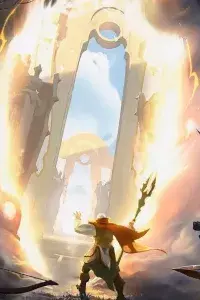
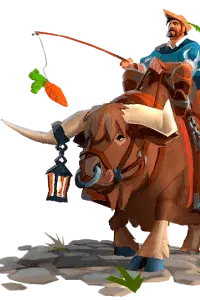
Albion Online is a sandbox MMORPG from Sandbox Interactive, seen from an isometric top-down camera. There are no classes. What you wear and carry defines the role, and almost every item in the world is crafted, gathered or traded by other players. That is why losing a bag stings far more than losing a level elsewhere. The game is free to play on Steam or through its own launcher, and the real currency is information.
Zones, risk and the full-loot rule
The map is split by danger. Blue and yellow zones are forgiving. Red and black zones use full-loot PvP: whoever drops leaves everything on the ground, and whoever stands nearby takes it. Gatherers head into those zones because the resources pay better, and hunters wait on the same roads. With the camera pinned above the action, trees and walls hide plenty. A radar fills in what the view leaves out, and loot ESP shows what is still lying around after a fight.
Mists, Hellgates and the dungeon ladder
The Mists open portals with rare finds and sudden encounters. Hellgates drop two parties into a closed arena where the winner keeps the drops. Corrupted Dungeons send a single player down narrow corridors that are easy to enter and hard to leave. Avalonian Dungeons hold the best chests, and also the groups willing to fight for them. In every one of these modes, a second or two decides whether you leave with your kit or without it.
What the build actually does
BYSTER is a market and PvP helper, not a bot. Loot ESP marks resources, dungeon loot and enemy drops on the ground. The 2D radar shows movement around you as a flat map. It does not aim, does not steer your character, does not handle recoil because the game has none, and does not draw skeletons. You still pick every fight. The card lists the status as working and reliability as excellent.
Which playstyle it fits
Solo gatherers use the radar to turn back in time. Dungeon groups lean on loot ESP to skip checking every corner. Traders hauling goods between cities want a quiet road through the red zone. There is only one build, so the choice is simple: confirm your PC matches the requirements and check that the card status is green before you play.
One more thing about the rhythm of a session. A night in Albion rarely stays short: you gather materials, refine them, then carry the result to a market across a dangerous road. Every stage can be lost in a single encounter, so most of your time goes into caution rather than combat. You look around, wait, take another path. The radar turns that caution into concrete information, and loot ESP removes the wasted laps around the map after someone else's fight. There is no magic in it, only fewer blind spots and fewer empty minutes, especially late in the evening when your attention is not what it was. If you want more out of the same number of hours, a two-tool kit covers the most painful part of the game: gear that is gone and cannot be bought back.