
Mini PC for a DMA setup
- Второй ПК
- Компактный
- Готов к работе
A DMA setup runs on two computers. The first is your gaming PC, with the DMA card in it. The second takes in its memory, runs the cheat and draws the overlay — and this is that second computer. It doesn't need to be powerful, but it still has to be built for the job: OS, drivers, settings. This Mini PC arrives already set up — all that's left is to wire it into the chain. Below: how it works, what's inside and what it fits.
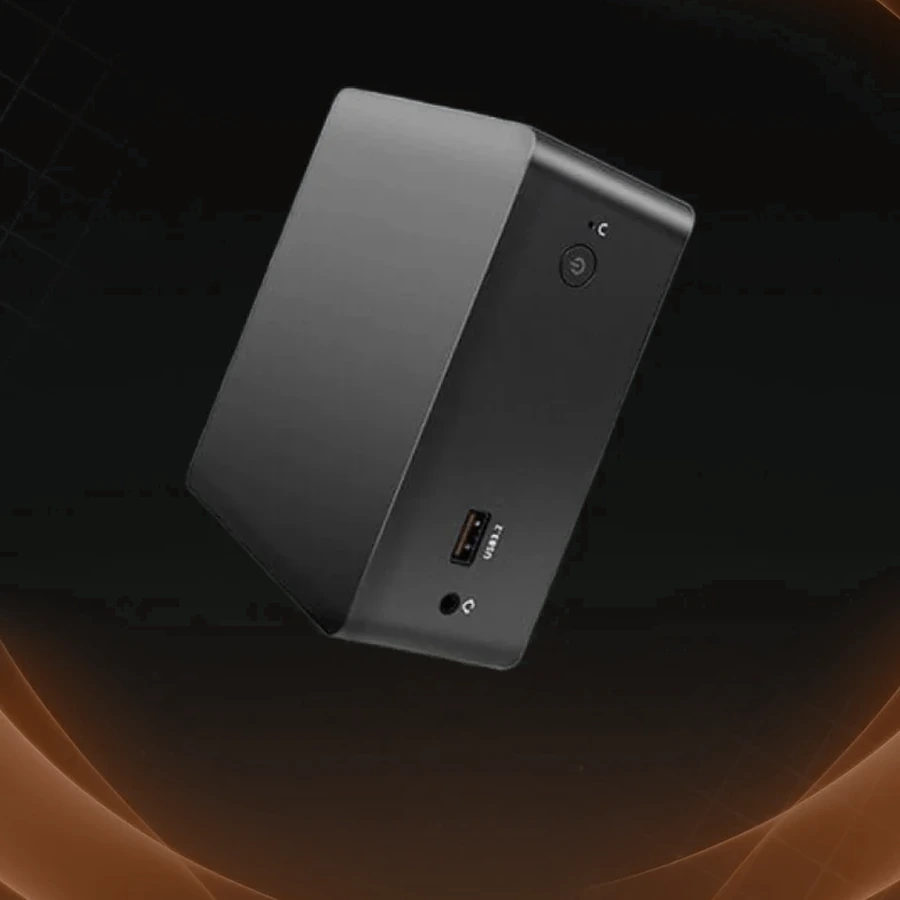
What’s in the box
- Mini PC
- Power supply
- Preconfigured system
Specs and features
Specifications8
- CPU — SOC with Intel UHD Graphics Gen12
- RAM — up to 32 GB DDR4 3200 MHz
- Storage — M.2 2280 PCIe 3.0 NVMe up to 1 TB
- Display — 4K at 160 Hz, 2560×1440 at 240 Hz, 1920×1080 at 240 Hz
- Ports — DP 1.2, HDMI 2.0, USB 3.2, RJ45, 3.5 mm audio
- Wi-Fi 6 on an M.2 2230 module
- OS — Windows 10/11 or Linux (CentOS, Ubuntu)
- Size — 124.5 × 112 × 50.8 mm
Why this one for DMA4
- DMA speed of 5500 keeps latency at a minimum
- Handles high refresh rates, so the overlay does not cap your monitor
- A fast NVMe means the software and configs load instantly
- The compact case is easy to keep out of sight
More about Mini PC
Why a setup needs a second machine
A DMA cheat never runs on the gaming PC — that's the whole point. The card in the gaming machine streams its RAM over PCIe to a separate box, and the cheat runs there: it builds the ESP, draws the radar and works out the aim. Nothing extra starts on the gaming PC, so memory-based anti-cheat has nothing to catch.
This Mini PC is that second machine. It takes the feed from the DMA card and puts out the overlay. DMA speed is 5500, which keeps latency low, so the picture from the second machine stays in step with the game.
Ships ready to use
Building a second machine from scratch means installing the OS, the drivers and tuning it for DMA. That's already done here: the Mini PC comes with the system set up and a power supply in the box. In practice all that's left is to wire it into the chain and load the cheat.
The OS is Windows 10/11 or Linux (CentOS, Ubuntu). Storage is a fast M.2 NVMe, so software and configs load at once. The case is compact, 124.5 × 112 × 50.8 mm, and easy to keep out of sight.
What's inside and what it fits
The CPU is a SOC with Intel UHD Graphics Gen12. Memory goes up to 32 GB DDR4 3200 MHz, storage is M.2 2280 PCIe 3.0 NVMe up to 1 TB — more than enough for the second-machine role.
Display output runs 4K at 160 Hz, 2560×1440 at 240 Hz and 1920×1080 at 240 Hz, so high refresh rates don't cap the overlay. Ports are DP 1.2, HDMI 2.0, USB 3.2, RJ45 and 3.5 mm audio, plus Wi-Fi 6 on an M.2 2230 module — enough to hook up a DMA card, a fuser or a second monitor, and a KmBox if you want aim.
Delivery, warranty and support
Stock, the shipping method and timing, warranty terms and any setup questions are handled in the DM — on Discord. Message before you pay: we confirm stock and answer shipping and warranty for your case.
After the purchase, the same place is where we help you wire the Mini PC into the chain and get it running.
Questions about buying
Is this the second machine or a gaming PC?
It's the second machine — the one that takes in memory from the DMA card, runs the cheat and draws the overlay. It isn't a gaming computer; the DMA card itself goes in your gaming PC.
Do I have to set it up?
No — it ships with the system configured and a power supply included. You just wire it to the DMA card and load the cheat; if something won't come up, we help after purchase.
What OS does it run?
Windows 10/11 or Linux (CentOS, Ubuntu). Storage is M.2 NVMe up to 1 TB and memory up to 32 GB DDR4 3200 MHz — enough for a second machine.
Can it handle high refresh and 4K?
Yes. Output is 4K at 160 Hz and 2560×1440 and 1920×1080 at 240 Hz, so the overlay won't cap your monitor's refresh rate.